


Awe doesn’t announce itself politely. It crashes in, dissolving whatever you thought you were doing a moment before. One warm October night in Brooklyn, I was waiting for a chance to look through a telescope manned by the Amateur Astronomers Association. I was debating whether whatever was on the other side would really be worth the long line. When it was finally my turn, I bent over the eyepiece and saw it. Saturn. Perfect rings, impossibly small, exactly like the emoji 🪐, only real. My body literally stumbled backwards. Tears blurred the image. Not to be dramatic, but it felt like something in my mind was completely rearranging. The planet wasn’t just far away; it was also impossibly close, as if it had been beamed into my body, boomeranging between myself and the cosmos. I left the telescope and stumbled into the night feeling both microscopic and limitless.
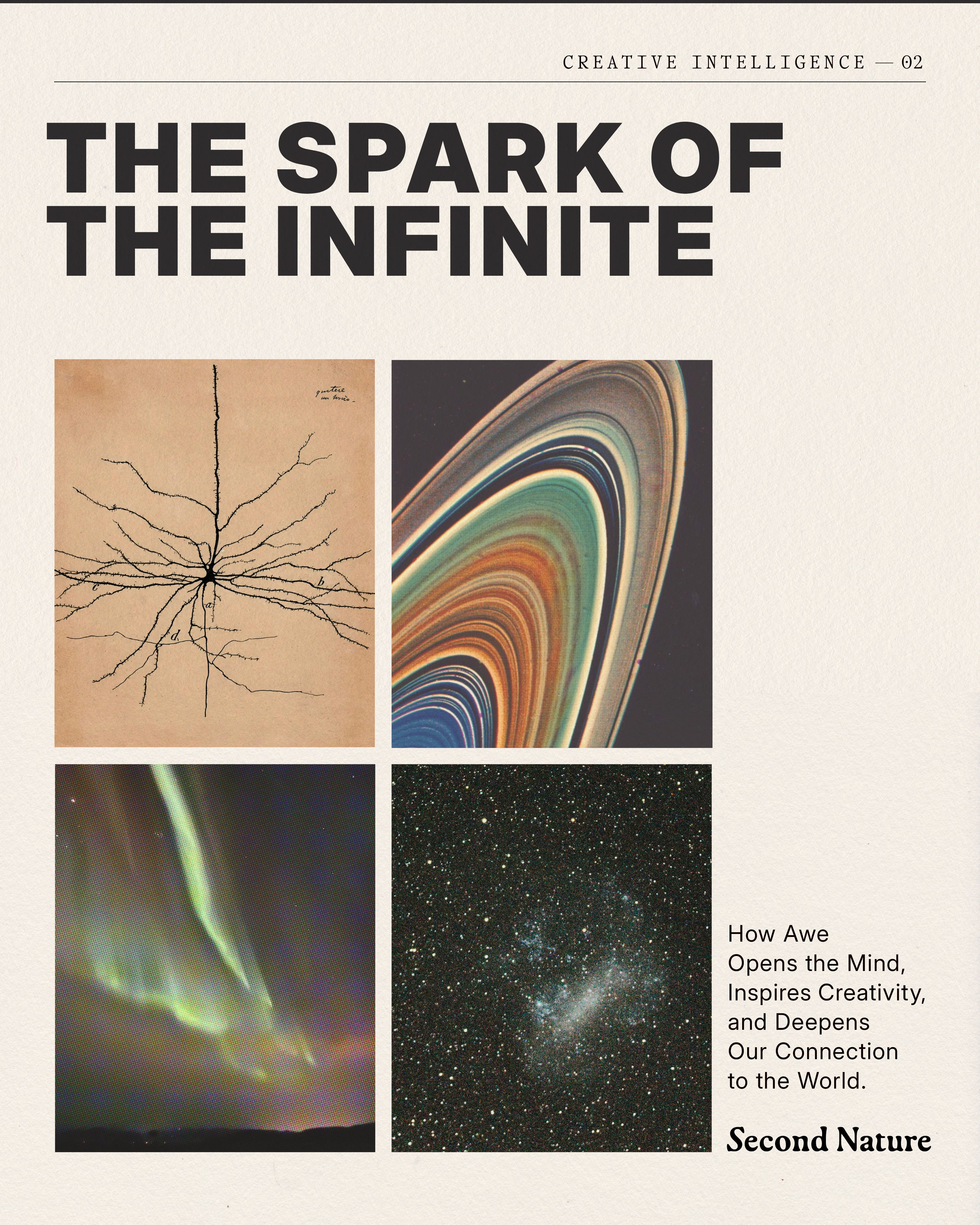
Psychologists call this seismic mental shift awe. A brief, self-transcendent state that catapults us out of our ordinary perspective and into something greater. In their foundational paper, Keltner and Haidt¹ define awe through two core components: perceived vastness (whether physical, conceptual, or social) and a need for accommodation, the mental work of updating your understanding of the world to fit what you’ve just experienced. My Saturn encounter embodied both. I witnessed something inconceivably vast, and once I trusted my eyes, my brain was hard at work trying to process how something so beautiful and so perfect could exist.
The human fascination with awe has deep roots. In the 18th century, Edmund Burke and Immanuel Kant wrote extensively about the “sublime,” a concept closely tied to awe. For Burke,² the sublime arose from vastness, obscurity, and power—experiences that overwhelm our capacity to fully grasp them. Kant³ saw awe as a confrontation with magnitude or moral greatness that outstrips our sensory comprehension, pushing us to recognize ideas beyond our imagination. He also underlined the idea that the sublime is an abivalent emotion and a “negative pleasure.” The Romantics carried these ideas forward, celebrating awe in the face of nature’s grandeur, from Turner’s turbulent seas to Wordsworth’s boundless landscapes.
Today, science offers its own vocabulary. Where philosophers saw the sublime as an aesthetic or moral category, psychologists and neuroscientists investigate awe as a state with measurable effects on the mind, body, and behavior. Yet the thread is the same: awe transforms how we see ourselves in relation to the world.
WHAT AWE DOES TO THE SELF
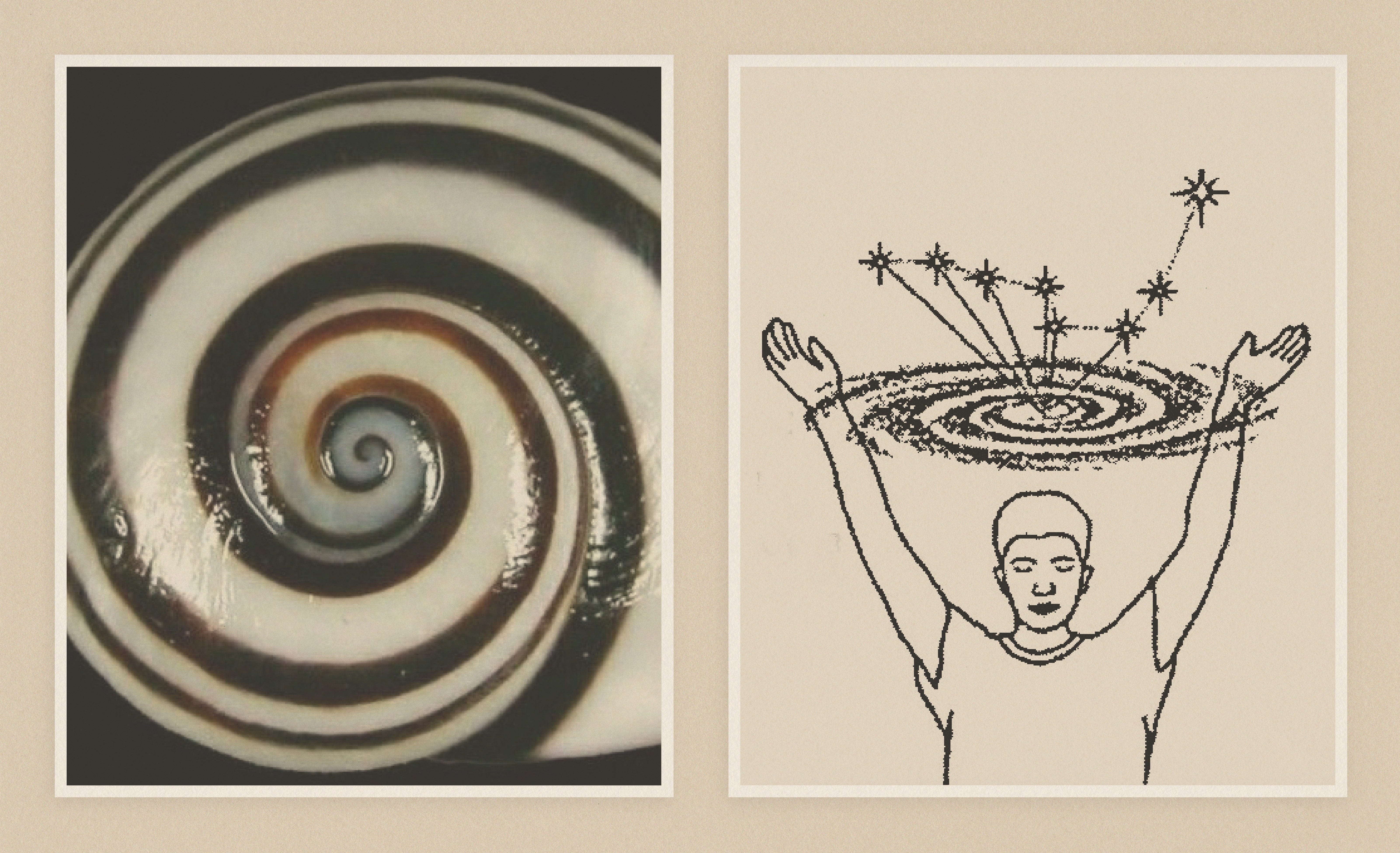
Awe doesn’t just make things feel big—it makes us feel small, in a way that can be deeply meaningful. This “small self” is not diminishment but perspective: a shift from self-focus toward connection with something larger.⁴ Experiences that elicit awe tend to expand our sense of time,⁵ increase feelings of social connection,⁶ and even make people more generous.⁷
The mechanism behind this begins with vastness: physical immensity like mountains or space, conceptual expansiveness like a brilliant idea, or social magnitude like encountering extraordinary talent. Then comes accommodation: the brain working to adjust mental models to fit the new input. That process can temporarily quiet the default mode network, the set of brain regions active during self-referential thinking,⁸ which may explain why awe often feels like a pause in the constant hum of inner chatter.
WONDER IN THE BODY AND MIND
Awe is a deeply embodied experience. Research has documented universal physical expressions—widened eyes, a dropped jaw, a spontaneous inhale.⁹ Heart rate may slow, and skin conductance (a marker of physiological arousal) can increase.¹⁰ These signals reflect a paradox in awe: it can feel both calming and energizing at once.
Neuroscientifically, awe engages networks involved in sensory integration, emotion, attention, conscious self-regulation, cognitive control, and social emotion.¹¹ This whole-brain involvement may help explain why awe is so effective at shifting perspective; it’s integrating our bodily sensations with complex cognitive and emotional meaning-making.
Contemplative traditions have long recognized this integration of body and mind. In Zen Buddhism, the experience of kenshō, or sudden seeing into the nature of reality, can sometimes be accompanied by the kind of expansive, embodied awareness we might describe as awe. In Christian mysticism, moments of awe are described as a “felt sense” of the divine, where physical stillness and mental clarity converge. These traditions frame awe not as a rare accident, but as a state we can invite through attention and openness.
AWE AS A SPARK FOR CREATIVE THINKING
Awe loosens the boundaries of the possible. By pulling us out of habitual patterns, it can expand the mental search space for ideas. In experimental settings, awe has been shown to increase cognitive flexibility¹² (the ability to shift between different ways of thinking) and openness to new experiences.¹³ Both are critical for creativity.
Artists and scientists alike have described awe as a starting point: Ansel Adams recalling the first time he saw Yosemite, Albert Einstein crediting the “mystery” of nature as his greatest inspiration. Awe disrupts the mental shortcuts we rely on, making room for novel connections and untested approaches.
You can cultivate this spark intentionally. Seek out what stretches your mind. Art that confounds you, questions that have no easy answer, landscapes that stop you in your tracks. And instead of rushing to post it on social media or send it to others, stay with it, sit with it. Let the mental expansion do its work before you channel it into making.
INVITING AWE IN
While awe often catches us off guard, we can also create conditions that make it more likely. Psychologists have tested “awe walks,” short, intentional strolls where participants look for vastness or beauty in the everyday.¹⁴ In one study, participants who took weekly awe walks over eight weeks reported greater well-being and more frequent awe experiences.
Try this: at least once this week, go somewhere with the sole intention of noticing what moves you. It might be the scale of a city building, the complexity of a flower, or the sky turning indigo at dusk. Pause. Breathe. See what shifts.
Awe does not require a telescope or a mountain range. It asks only that we step outside the frame of our everyday concerns and see, even for a moment, as if the world were brand new.

📘 Awe by Dacher Keltner — An accessibly written deep dive into the science of awe.
🔊 On Being with Krista Tippett: The Thrilling New Science of Awe
📱 Meditations on Awe: Try the Waking Up App or Open App.
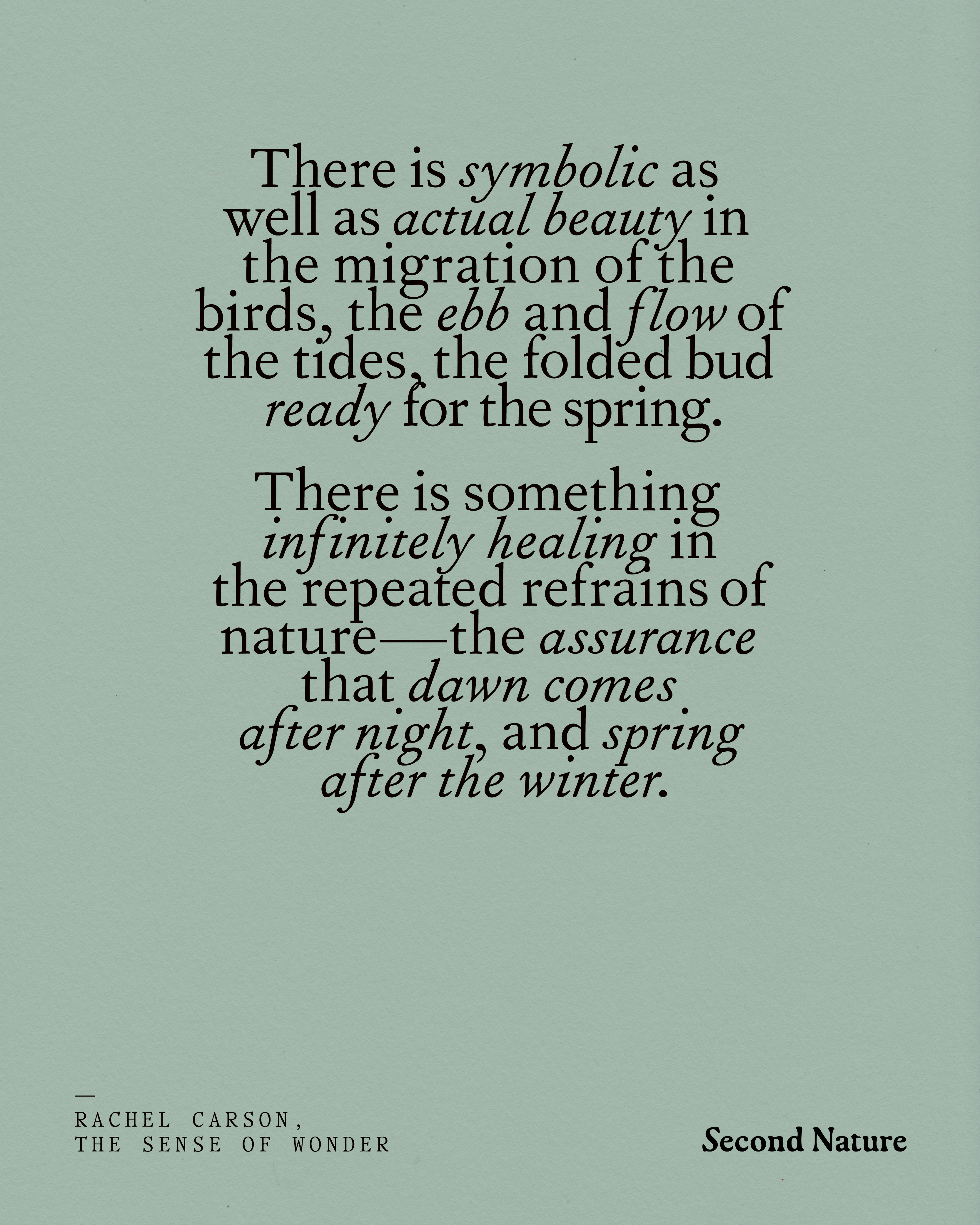
📘 The Sense of Wonder by Rachel Carson — A guide to recapturing childlike wonder.
🤓 Whitepaper: The Science of Awe — For those who want to get into the nitty-gritty.
P.S. Last week I led a workshop on awe, where we explored these ideas through research, guided reflection, and shared stories. If you’d like to be informed about future events like this, you can sign up here.
REFERENCES
Keltner, D., & Haidt, J. (2003). Approaching awe, a moral, spiritual, and aesthetic emotion. Cognition and Emotion, 17(2), 297–314. https://doi.org/10.1080/02699930302297
Burke, E. (1757). A Philosophical Enquiry into the Origin of Our Ideas of the Sublime and Beautiful.
Kant, I. (1790/1987). Critique of Judgment (W. S. Pluhar, Trans.). Hackett.
Shiota, M. N., Keltner, D., & Mossman, A. (2007). The nature of awe: Elicitors, appraisals, and effects on self-concept. Cognition and Emotion, 21(5), 944–963. https://doi.org/10.1080/02699930600923668
Rudd, M., Vohs, K. D., & Aaker, J. (2012). Awe Expands People’s Perception of Time, Alters Decision Making, and Enhances Well-Being. Psychological Science, 23(10), 1130-1136. https://doi.org/10.1177/0956797612438731
Piff, P. K., Dietze, P., Feinberg, M., Stancato, D. M., & Keltner, D. (2015). Awe, the small self, and prosocial behavior. Journal of Personality and Social Psychology, 108(6), 883–899. https://doi.org/10.1037/pspi0000018
Stellar, J. E., Gordon, A., Anderson, C. L., Piff, P. K., McNeil, G. D., & Keltner, D. (2018). Awe and humility. Journal of Personality and Social Psychology, 114(2), 258–269. https://doi.org/10.1037/pspi0000109
Van Elk, M., Arciniegas Gomez, M. A., Van der Zwaag, W., Van Schie, H. T., & Sauter, D. (2019). The neural correlates of the awe experience: Reduced default mode network activity during feelings of awe. Human brain mapping, 40(12), 3561-3574. https://doi.org/10.1002/hbm.24616
Campos, B., Shiota, M. N., Keltner, D., Gonzaga, G. C., & Goetz, J. L. (2012). What is shared, what is different? Core relational themes and expressive displays of eight positive emotions. Cognition and Emotion, 27(1), 37–52. https://doi.org/10.1080/02699931.2012.683852
Shiota M.N., Campos B., Oveis C., Hertenstein M.J., Simon-Thomas E., Keltner D. (2017). Beyond happiness: Building a science of discrete positive emotions. American Psychologist, 72(7), 617-643. https://doi.org/10.1037/a0040456
Guan F, Xiang Y, Chen O, Wang W and Chen J (2018). Neural Basis of Dispositional Awe. Frontiers in Behavioral Neuroscience. 12–209. https://doi.org/10.3389/fnbeh.2018.00209
Chirico, A., Glaveanu, V. P., Cipresso, P., Riva, G., & Gaggioli, A. (2018). Awe Enhances Creative Thinking: An Experimental Study. Creativity Research Journal, 30(2), 123–131. https://doi.org/10.1080/10400419.2018.1446491
Rudd, M., Hildebrand, C., & Vohs, K. D. (2018). Inspired to Create: Awe Enhances Openness to Learning and the Desire for Experiential Creation. Journal of Marketing Research, 55(5), 766-781. https://doi.org/10.1177/0022243718802853
Sturm V.E., Datta S., Roy A.R.K., Sible I.J., Kosik E.L., Veziris C.R., Chow T.E., Morris N.A., Neuhaus J., Kramer J.H., Miller B.L., Holley S.R., Keltner D. (2022). Big smile, small self: Awe walks promote prosocial positive emotions in older adults. Emotion, 22(5), 1044-1058. https://doi.org/10.1037/emo0000876